
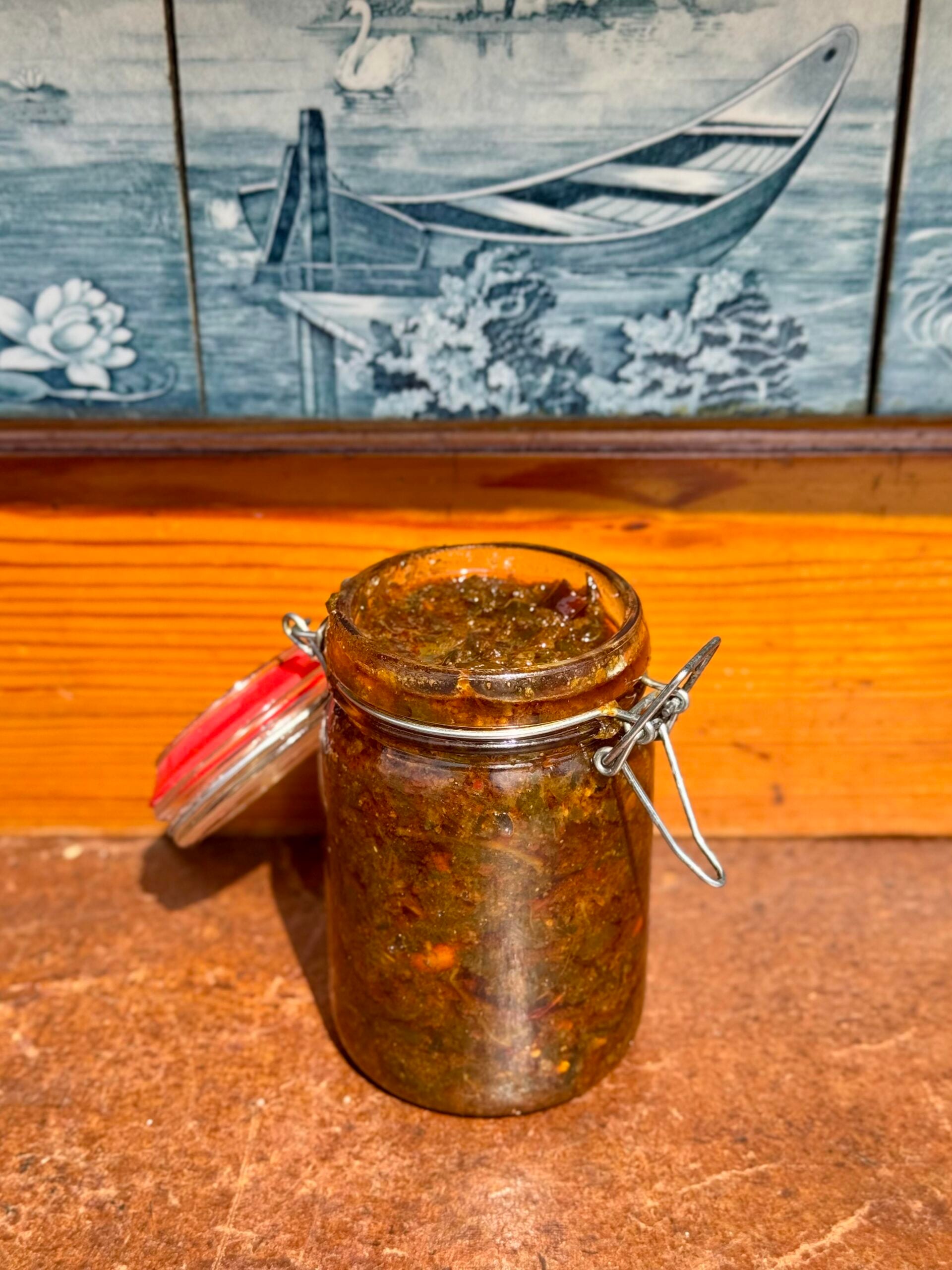
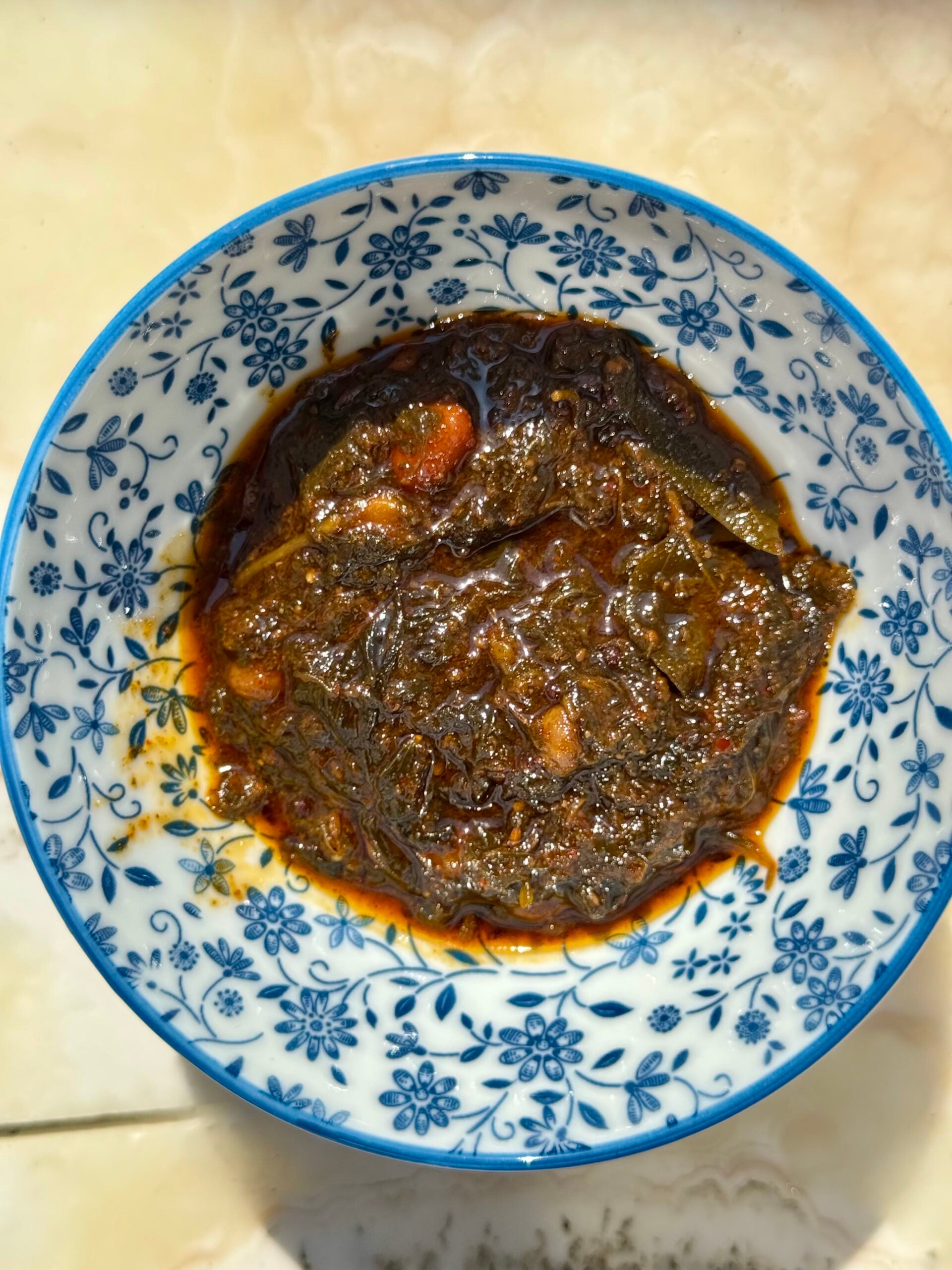
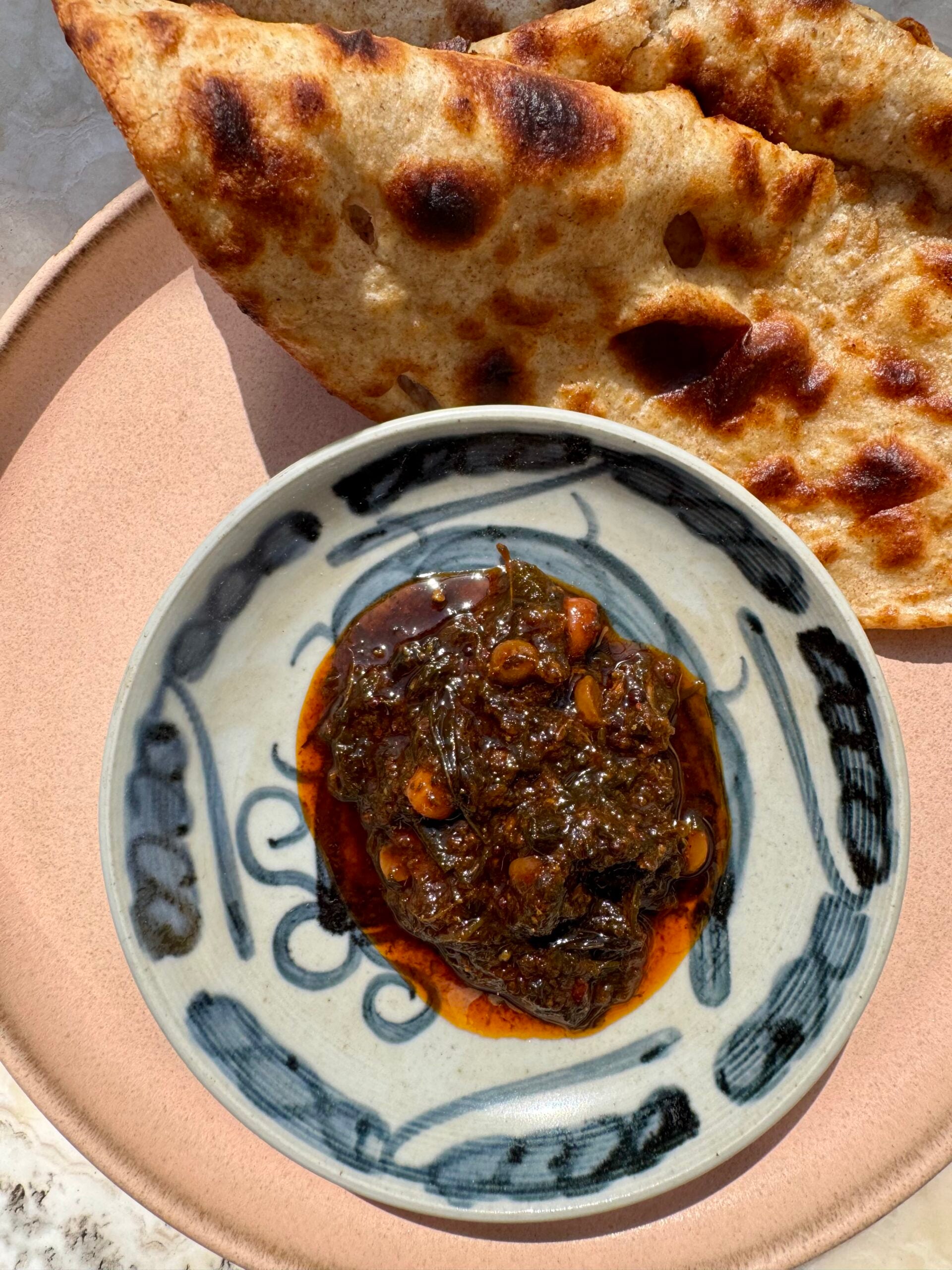
What Is Gongura?
Gongura refers to the edible green leaves of the roselle plant, scientifically known as Hibiscus sabdariffa.
Unlike the dried red calyces of the same plant that are often used to make herbal teas, Gongura specifically refers to the fresh green leaves used in cooking. They have a bold sourness that deepens when cooked, giving dishes a rich, mouthwatering flavor without needing extra tamarind or lemon.
It has been used for generations in traditional kitchens, especially in sour chutneys, dals, and spice blends. The leaves are typically sautéed, ground, or dried and powdered to be used as a seasoning. Even in small amounts, they add a noticeable tang that transforms simple ingredients into something more vibrant.
You will usually find Gongura sold fresh in bunches at local markets or dried as a coarse powder in spice stores. Whether fresh or dried, these green leaves are valued for their intensity, versatility, and long shelf life when stored properly.
Roselle plants growing in a field with gongura green leaves and red flower buds
Close up of Roselle plants showing red buds and gongura leaves
What Does It Taste Like?
Gongura has a bold, naturally sour taste that is sharp and mouthwatering. It is tangy like sorrel, with a slightly earthy depth underneath. The sourness feels clean and savory rather than citrusy.
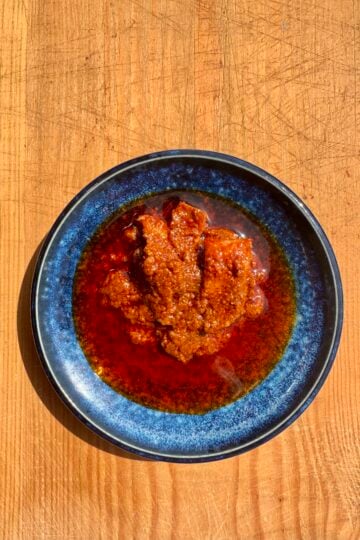
The fresh leaves are soft and tender, with thin stems. When cooked, they break down easily into a smooth, slightly pulpy consistency, making them ideal for chutneys, pastes, and spice blends.
Culinary Uses Around the World
-
South Asia: Gongura is cooked down and used in chutneys, dals, and rice mixes as a bold tangy seasoning.
-
Southeast Asia: Roselle leaves are used in sour soups and stews to add a clean natural tang.
-
West Africa: Roselle is popular in tart drinks like bissap and sometimes used to brighten sauces or stews.
-
North Africa and Middle East: Often brewed as hibiscus tea (karkade) for a sharp refreshing taste.
-
Caribbean: Known as sorrel, most famous in festive tangy drinks.
-
Central and South America: Common in agua de jamaica and other tart drinks served with meals.
-
Europe and North America: Mostly found as dried hibiscus tea, with Gongura powder available in specialty shops for cooking.
How to Get the Best Flavor From It?
-
Cook it first: Light sautéing or simmering softens the sharp sourness and makes the flavor deeper and smoother.
-
Crush or mash it: Once cooked, gently crush or grind the leaves. This releases more of their tang and spreads the flavor evenly through the dish.
-
Pair it with fat: Ghee or oil helps round out the sharp edges and carries the flavor better.
-
Add garlic and chilies: These bring out its earthy depth and brighten the sour kick.
-
Use it carefully: A small amount goes a long way. Too much can dominate the dish.
-
Season properly: Salt enhances the tang and keeps the flavor balanced instead of harsh.
Creative Ways to Use It Outside Traditional Cuisine
-
Blend into salad dressings: Whisk a small amount of cooked and mashed Gongura into olive oil, garlic, and honey for a bold, tangy vinaigrette.
-
Stir into yogurt dips: Mix Gongura paste into plain yogurt with salt and roasted cumin for a bright spread that pairs well with wraps or grilled vegetables.
-
Add to marinades: Combine Gongura with garlic, chili flakes, and oil to create a punchy marinade for tofu, chicken, or paneer.
-
Mix into grain bowls: Toss a spoonful into quinoa, couscous, or rice bowls to add natural sourness without using lemon.
-
Flavor compound butter: Blend finely crushed Gongura into softened butter, then chill and slice over roasted vegetables or bread.
-
Upgrade sandwiches and wraps: Spread a thin layer inside sandwiches for a sharp, savory kick that cuts through rich fillings.
Flavor Pairings
Gongura’s bold sourness works best when paired with ingredients that either balance its tang or amplify its depth.
-
Garlic: Adds warmth and earthiness that softens the sharp edge.
-
Green or red chilies: Highlight the bright, mouthwatering kick.
-
Ghee or oil: Fat rounds out the sourness and makes it smoother.
-
Onions: Bring natural sweetness that balances the tang.
-
Lentils: Absorb the flavor well and create a comforting base.
-
Roasted peanuts or sesame: Add nuttiness that complements the sour profile.
-
Mustard seeds and curry leaves: Enhance aroma and give a layered finish.
-
Rice and flatbreads: Neutral bases that let Gongura shine without overpowering the dish.
When pairing, think balance. If the dish is already spicy, let Gongura bring brightness. If it is rich or heavy, use it to cut through and refresh the palate.
Gongura Substitutes
If you cannot find Gongura, you can still recreate its tangy profile with the right alternatives. The key is choosing ingredients that bring a similar natural sourness.
-
Sorrel leaves: The closest match in flavor and texture. They offer the same sharp, leafy tang and work well in cooked dishes.
-
Tamarind pulp: Stronger and darker in taste, but effective when you need bold sourness. Use a smaller quantity and balance with greens.
-
Lemon juice or dried mango powder: These add brightness but lack the earthy depth of Gongura. Best used in combination with sautéed greens.
-
Spinach with tamarind: Spinach alone is too mild, but pairing it with tamarind helps mimic both the body and sourness.
For best results, adjust slowly and taste as you go. It's flavor is distinctive, so small tweaks can make a big difference.
How to Store It Right
Proper storage helps keep its flavor and color longer.
-
Fresh leaves: Wrap them loosely in a paper towel to absorb moisture, then place them in a breathable bag in the refrigerator. Use within a few days for the best taste.
-
Washed leaves: Make sure they are completely dry before storing. Extra moisture causes faster spoilage.
-
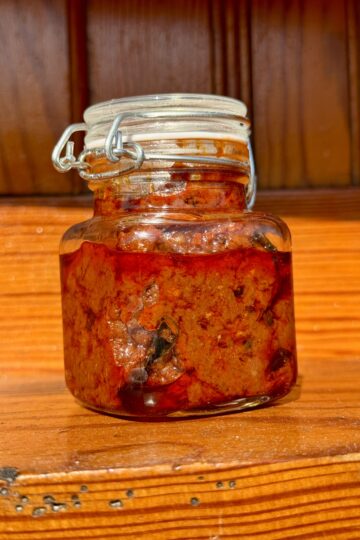
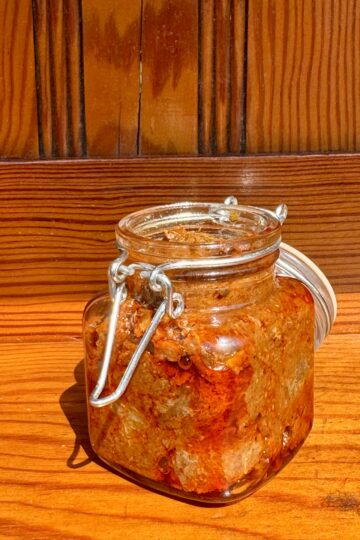
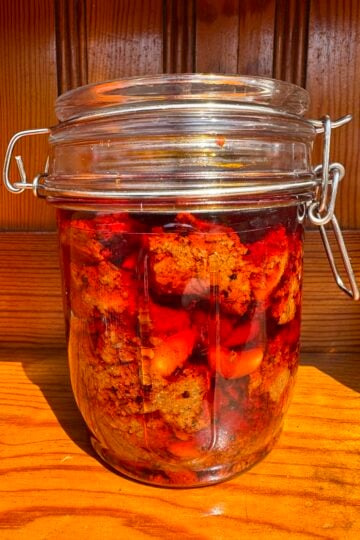
Cooked paste: Store in an airtight container in the fridge. A thin layer of oil on top helps preserve freshness.
-
Dried powder: Keep it in a sealed jar away from heat, light, and humidity. Store it in a cool, dry place for longer shelf life.
The key is simple: keep it dry, cool, and protected from air. That way, the tang stays bold instead of fading.
Nutritional Value (Per Tablespoon)
It is usually used in small amounts, but even a tablespoon can add a light nutritional boost along with that signature tang:
-
Calories: ~2 kcal
-
Protein: ~0.1 g
-
Fiber: ~0.2 g
-
Carbohydrates: ~0.2 g
-
Fat: ~0.1 g
-
Micronutrients: small amounts of vitamin C, vitamin A, potassium, magnesium, calcium, and iron
These numbers can vary based on leaf variety and whether you are using fresh leaves, cooked paste, or dried powder, but this gives a realistic baseline for what you are adding to your food.
Health Benefits That Actually Matter
-
Antioxidant support: Gongura leaves contain compounds like polyphenols that show antioxidant activity that helps the body manage everyday oxidative stress (Source).
-
Vitamin C content: Like many leafy greens, fresh Gongura contains vitamin C, which supports immune function and skin health (Source).
-
Iron contribution: Gongura leaves may provide iron content making it an excellent iron source for individuals suffering from anemia, as it helps in the production of red blood cells (Source).
-
Supports appetite: Gongura leaves may stimulate appetite and supports digestion (Source).
-
Mineral Support: Gongura leaves are naturally rich in calcium, magnesium, and phosphorus, minerals that help support strong bones and overall skeletal health (Source).
As always, moderation matters. It is a flavorful, nutrient supportive leafy green, not a cure or supplement replacement.
Potential Health Risks
Gongura is safe for most people when used in balanced amount, but a few points are worth knowing.
-
Oxalate content: Like many sour leafy greens, gongura leaves contain oxalates. People who are prone to kidney stones or have been advised to limit high oxalate foods should keep portions moderate (Source).
-
May affect blood pressure: Gongura leaves may lower blood pressure. If you are already on blood pressure medication, large or concentrated amounts could require caution (Source).
-
Digestive sensitivity: Its sharp sourness may irritate the stomach in large quantities, especially for people with acid reflux or sensitive digestion (Source).
-
Blood sugar interaction: Some studies suggest possible blood sugar lowering effects. People taking diabetes medication should be mindful of excessive intake (Source).
Used in typical culinary amounts, it is generally well tolerated. As always, moderation keeps things balanced.
Final Thoughts
Gongura may look like just another leafy green, but its bold sourness sets it apart. A small amount can completely change the taste of a dish, turning simple ingredients into something vibrant and memorable.
It is low in calories, naturally tangy, and surprisingly versatile. Whether used fresh, cooked down, or dried into powder, it brings character without complexity.
If you enjoy flavors that wake up your palate, Gongura is worth exploring. Start small, pair it thoughtfully, and let its natural tang do the work.
FAQs
Is Gongura the same as sorrel?
Gongura comes from the roselle plant, which is a type of sorrel. However, in cooking, “Gongura” usually refers specifically to the edible green leaves used for their bold sour flavor.
Can you eat Gongura raw?
It can be eaten raw in small amounts, but it tastes very sharp. Most people prefer cooking it first to soften the acidity and deepen the flavor.
Is Gongura very sour?
Yes, it has a naturally strong tang. The sourness is clean and savory rather than citrusy, and it becomes smoother once cooked.
Is Gongura good for health?
Like many leafy greens, it provides antioxidants and small amounts of micronutrients. It works best as part of a balanced diet, not as a remedy.
Where can I buy Gongura?
You will usually find fresh leaves in South Asian grocery stores. Dried Gongura powder is often available in specialty spice shops or online stores.
How much Gongura should I use?
Start with a small quantity. Its flavor is strong, and a little is often enough to noticeably lift a dish.
Learn More About Gongura
Wikipedia – Gongura


Have a question or something to share? Leave a comment below!