

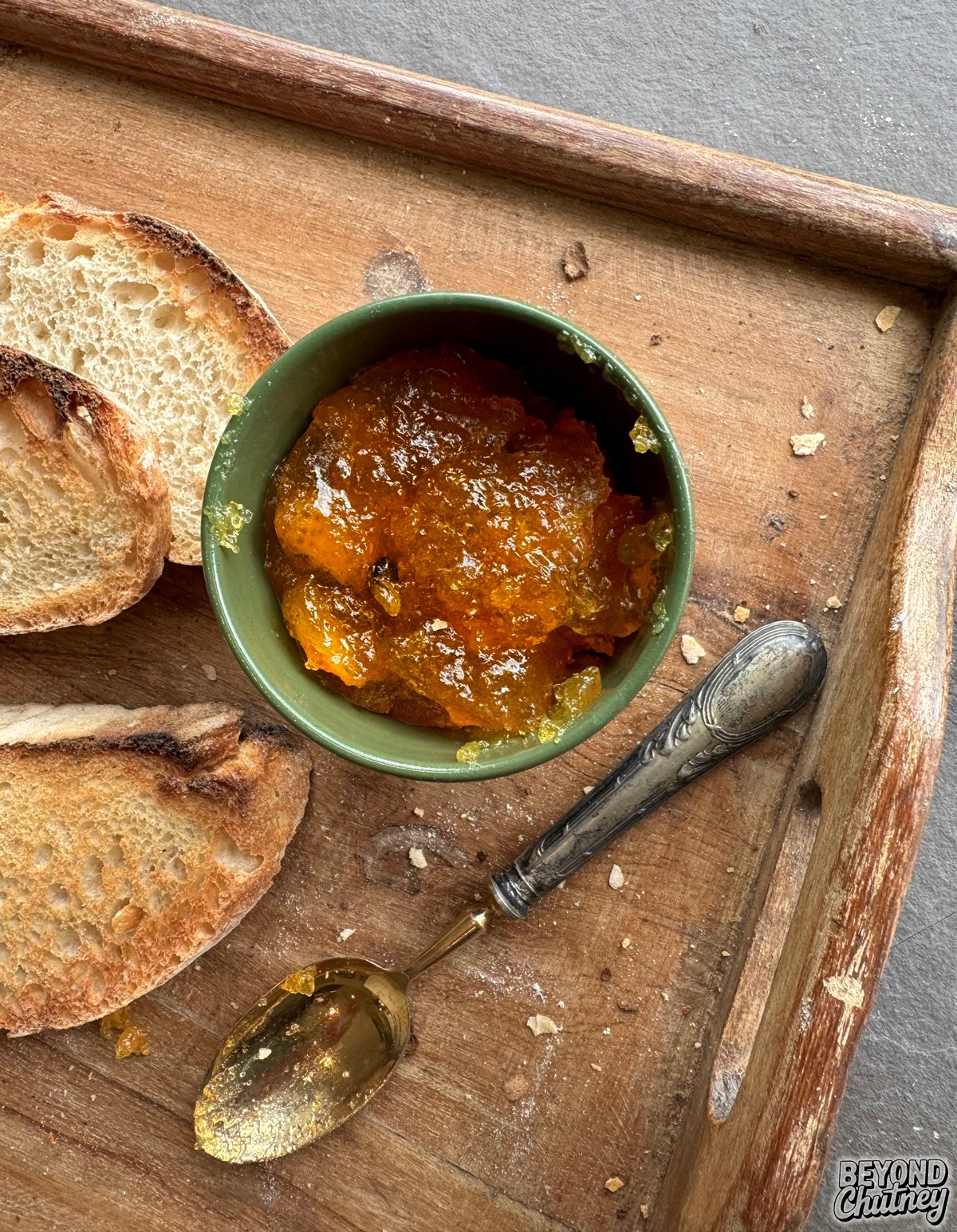
This orange marmalade has a simple charm to it. The moment it starts simmering, your whole kitchen fills with the smell of citrus and warm spices—it’s honestly one of the best parts. The sweet orange, the deep, almost floral scent of star anise, a hint of cinnamon and the clove in the background... it’s cozy, comforting, and just makes you want to stay home. It smells like something between mulled wine and a winter market, but softer—more homemade. I usually end up just standing there, stirring and breathing it in, like it’s a quiet Sunday afternoon and everything else can wait.
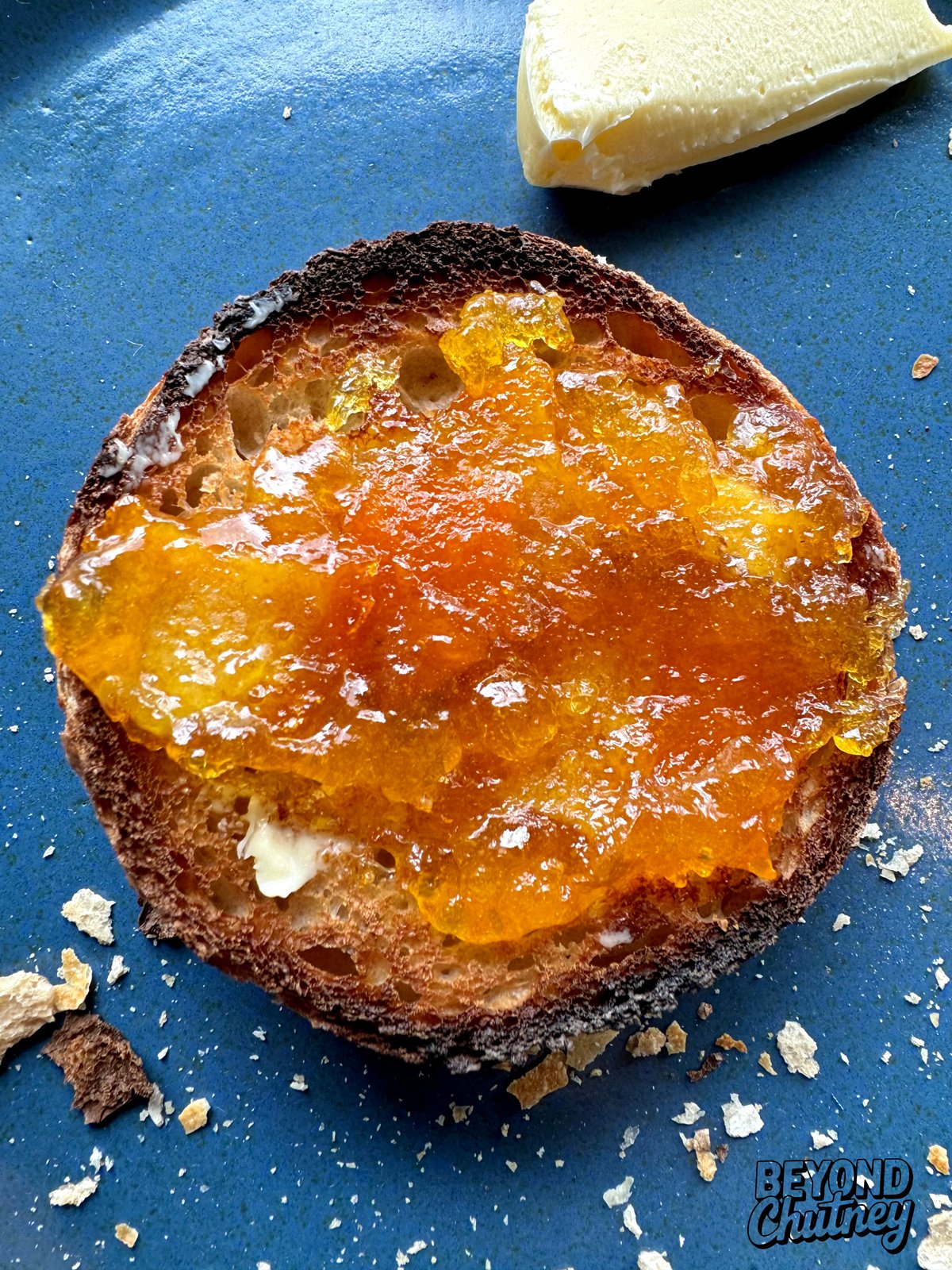
It’s sweet and gently spiced—just the kind of thing I want on freshly toasted bread when it’s cold outside. The mix of cinnamon, cloves and star anise gives it a warm, nostalgic edge without being overpowering.
If you prefer a fresher, slightly sharper note to balance the sweetness, try adding a small piece of freshly grated ginger—it brings a bit of lift and a subtle kick that works beautifully.
It only takes a few ingredients, and most of them are probably already in your pantry.
Orange marmalade might sound like something straight off a British breakfast table—but it has a history in India too. The British brought it here during colonial times, craving that bittersweet spread from home. At first, they struggled with the local oranges, which were too sweet for traditional marmalade. So they started planting Seville and Malta oranges in India, slowly turning marmalade-making into a local tradition.
But India already had a love for preserves. Mughal kitchens made fruit murabbas—sweet, spiced syrups often using amla or orange peel. So marmalade didn’t arrive into unfamiliar territory—it just came with a different flavor and purpose.
In many Anglo-Indian households, marmalade became part of everyday life. Families made it at home with whatever fruit was in season, sometimes adding Indian touches like ginger or warming spices. It was packed into lunchboxes, served at tea-time, or gifted during the holidays.
Today, orange marmalade still has a small but steady place in Indian kitchens. You’ll find jars of it in most supermarkets, right next to mixed fruit jam and Kissan mango spread. Some modern Indian recipes take the old British idea and warm it up with star anise, cloves or cinnamon—just like the version in my recipe. It’s a little bit of East meets West, in a jar.
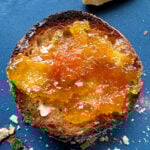
Orange Marmalade with Star Anise, Cinnamon & Cloves
Ingredients
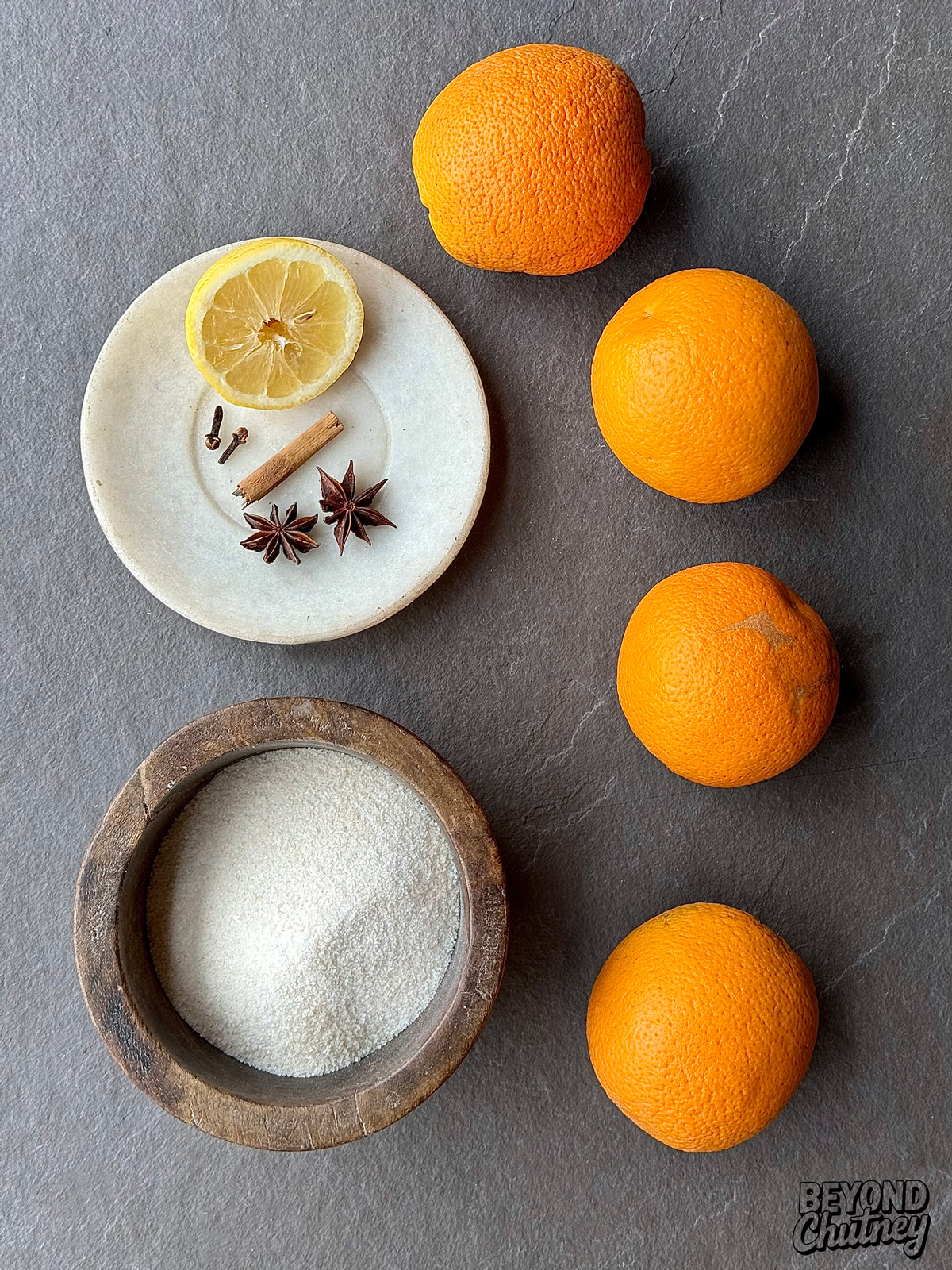
- 500–600 g fresh oranges enough to yield 225 ml juice and 25 g zest
- 25 g orange zest cut into fine strips
- 225 ml freshly squeezed orange juice
- 200 g granulated sugar
- 2 g whole star anise
- 3 g cinnamon stick about 5 cm (1 stick)
- 1 g whole cloves (3 cloves)
- 15 ml fresh lemon juice
Instructions
- Place a few small plates in the freezer – you'll need them later for testing the marmalade's set.
- Roll the oranges on the countertop with light pressure to help release the juice.
- Peel the oranges thinly using a vegetable peeler, avoiding the white pith. You’ll need about 25 g of zest.
- Juice the oranges until you have around 225 ml of juice.
- Slice the zest into fine strips.
- Add the orange juice, zest, star anise, cinnamon stick, and cloves to a saucepan. Simmer over medium heat for about 10 minutes.
- Remove from heat, stir in the sugar until fully dissolved.
- Return the pan to the stove and let the mixture gently simmer, uncovered, for about 45 minutes or until it thickens.
- Add the lemon juice and cook for another 2 minutes. To test if it's ready, spoon a little marmalade onto a cold plate and drag your finger through it – if the line stays clear, it's done.
- Remove the spices. Pour the hot marmalade into sterilized jars, seal immediately, and let cool completely.
Notes
- Type of oranges: Use juicy, flavorful oranges—Valencia or blood oranges work well. Avoid dry or overly sweet varieties.
- Zest tip: Be sure to only use the orange part of the peel. The white pith underneath is bitter and will affect the flavor.
- Star anise & clove strength: These spices are strong. Stick to the amounts listed—more can easily overpower the marmalade.
- Sugar type: Preserving sugar helps with setting thanks to added pectin. If using regular sugar, cook a bit longer and test carefully for doneness.
- Gel test: The cold plate test is important—don’t skip it. If the marmalade is too runny, simmer a few minutes more and test again.
- Storing: Store in sterilized jars and keep them in a cool, dark spot. Once opened, refrigerate and use within a few weeks.
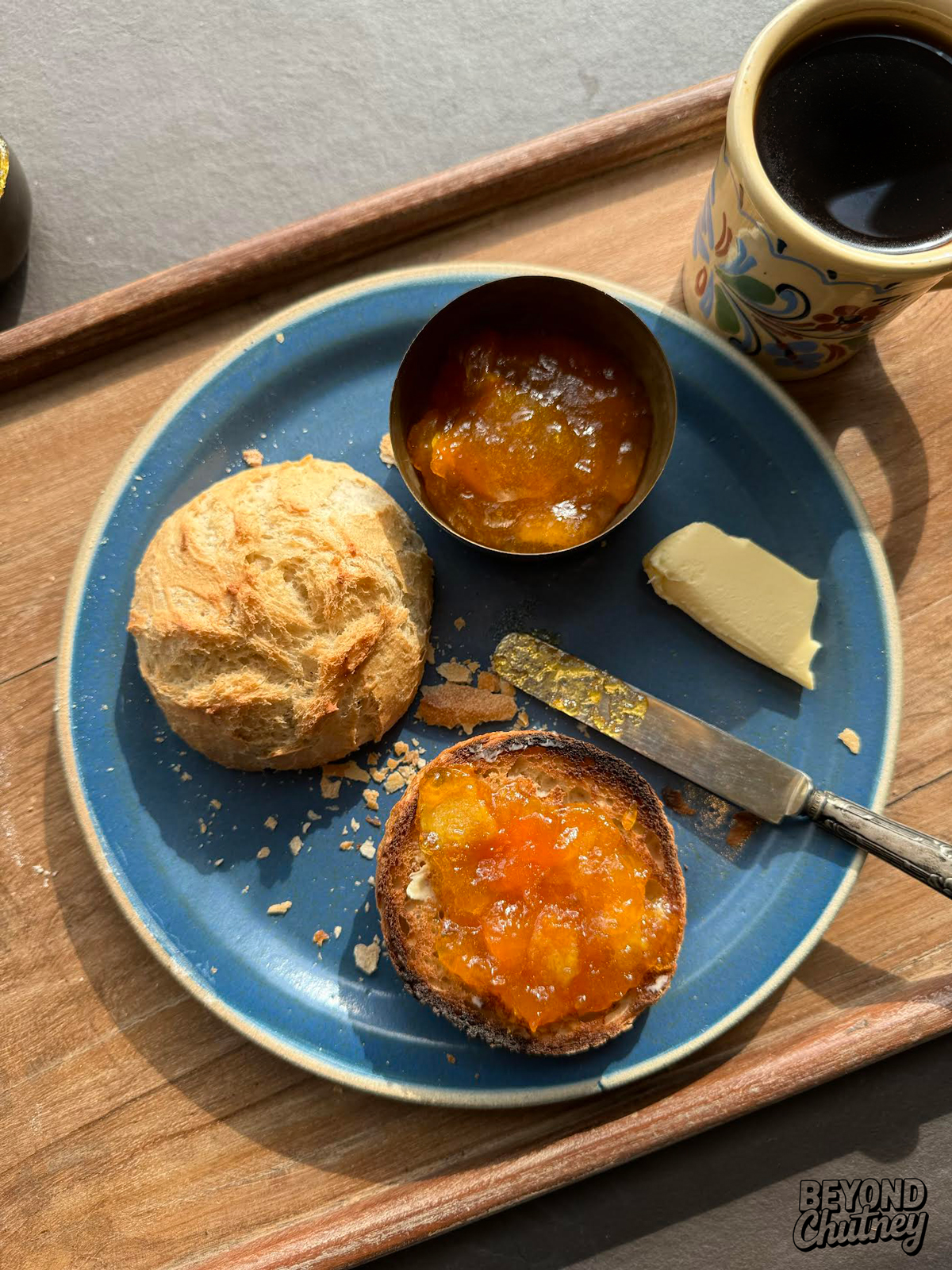
- Serving idea: Delicious on warm, freshly toasted bread, stirred into porridge, or even as a glaze for cakes or roasted vegetables.
Recipe Twist Ideas
- Add ginger: For a little warmth and a fresh kick, stir in ½ teaspoon of freshly grated ginger while the marmalade simmers.
- Make it boozy: Add a splash (1–2 tbsp) of whisky, rum, or Grand Marnier at the very end of cooking for a grown-up version.
- Spice swap: Try a pinch of crushed cardamom or a few black peppercorns instead of cloves for a different kind of warmth.
- Citrus mix: Replace half the oranges with grapefruit, blood orange, or lemon for a more complex citrus flavor.
- Herbal hint: Add a small sprig of rosemary or a few fresh thyme leaves while cooking, then remove before jarring. It’s subtle but lovely.
- Chili heat: If you like a bit of spice, toss in a small dried red chili or a pinch of chili flakes. Goes surprisingly well with toast and cheese.
Nutrition
FAQ about Orange Marmalade with Star Anise, Cinnamon & Cloves
Can I use regular sugar instead of preserving sugar?
Yes, you can. Just be aware that preserving sugar contains pectin, which helps the marmalade set. If you’re using regular sugar, you’ll need to simmer it a little longer and check the texture carefully with the cold plate test.
What kind of oranges are best for marmalade?
Valencia and Seville oranges are ideal because they have a balance of sweetness and bitterness. You can also use blood oranges for a deeper color and slightly tangier flavor. Avoid dry or overly sweet varieties, as they don’t provide the right balance.
Can I adjust the spices?
Definitely. The combination of star anise, cinnamon, and cloves gives a warm, rounded flavor, but you can adjust it to your liking. Cardamom, nutmeg, or even a bit of black pepper can work well too. Just remember that star anise and cloves are quite strong—use them sparingly.
How long does homemade marmalade last?
If stored in sterilized jars and kept in a cool, dark place, it should last for up to 6 months unopened. Once opened, keep it in the fridge and use it within 2 to 3 weeks.
Why is my marmalade too runny or too thick?
Runny marmalade means it wasn’t cooked long enough—just simmer it a bit more and test again. If it’s too thick, it was likely overcooked or had too much sugar. You can gently stir in a little hot water to loosen it.
Can I make it less sweet?
Yes, but be cautious. Sugar isn’t just for sweetness—it also helps with setting and preservation. You can reduce the sugar slightly, but don’t go below a 1:1 ratio of fruit to sugar by weight, or it may not set properly.
Can I make it without the spices?
Of course. The base recipe works beautifully even without spices if you prefer a classic orange marmalade flavor.
Is marmalade vegan?
Yes, this recipe is naturally vegan since it doesn’t include gelatin or animal-derived ingredients.
Can I double the recipe?
Yes, but use a wide pan so the mixture reduces evenly. Doubling the batch will extend cooking time slightly.
There’s something special about making marmalade from scratch - the slow simmer, the citrusy steam, the moment it starts to thicken just right. This spiced orange version feels both familiar and new at the same time. It’s cozy on cold mornings, bright enough for summer toast, and makes a thoughtful homemade gift if you’re feeling generous. Once you’ve made your own, those store-bought jars will never taste quite the same.
Caroline says
So flavorful and easy to make. My kitchen smelled amazing the whole time.
Bernhard Schaus says
So glad you liked it! The smell is one of my favorite parts too 😋