
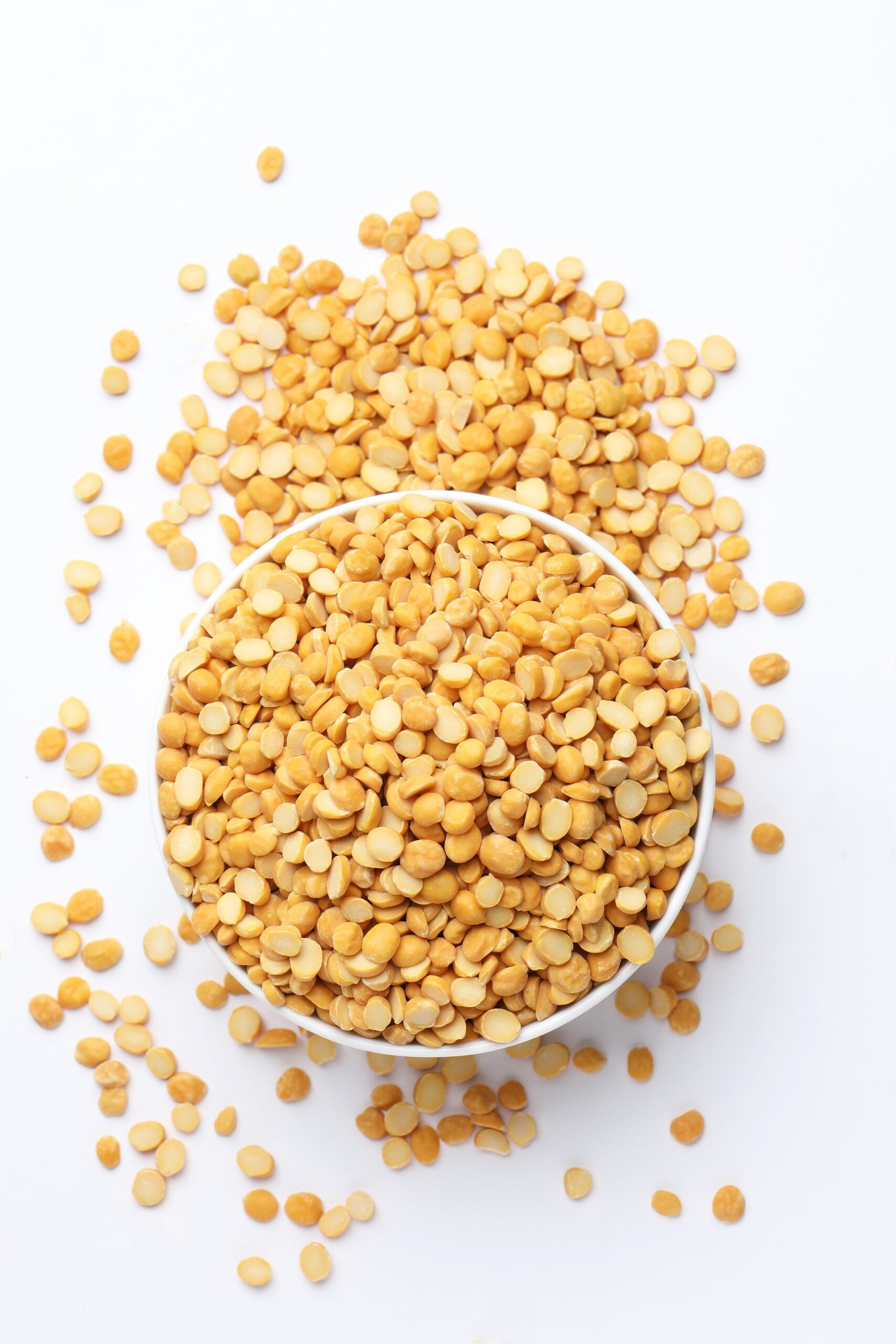
What Is Chana Dal?
Chana dal is a split pulse made from desi chickpeas, also called Bengal gram. It looks like small yellow lentils, but it is not a lentil. It comes from black or brown chickpeas that are hulled and split.
The crop traces its origins to the Mediterranean and parts of the Middle East, and over time it became widely cultivated across South Asia and other warm regions.
Today, chana dal is used in everyday dal recipes, curries, soups, festive dishes, and savory snacks in many kitchens. It is popular because it is nourishing, affordable, versatile, and naturally rich in plant based protein and fiber.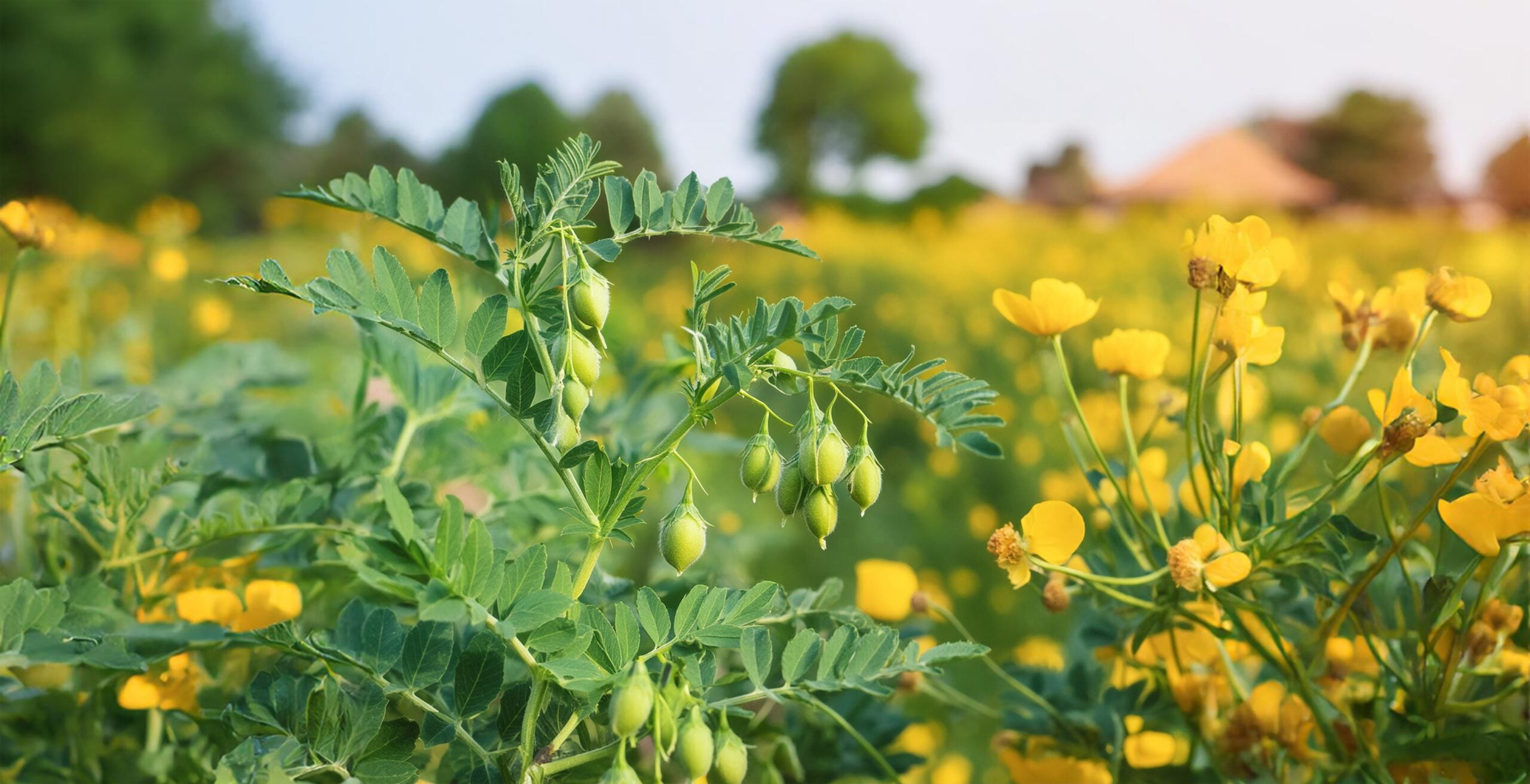 A chickpea crop field where desi chickpeas are grown before being hulled and split to produce chana dal.
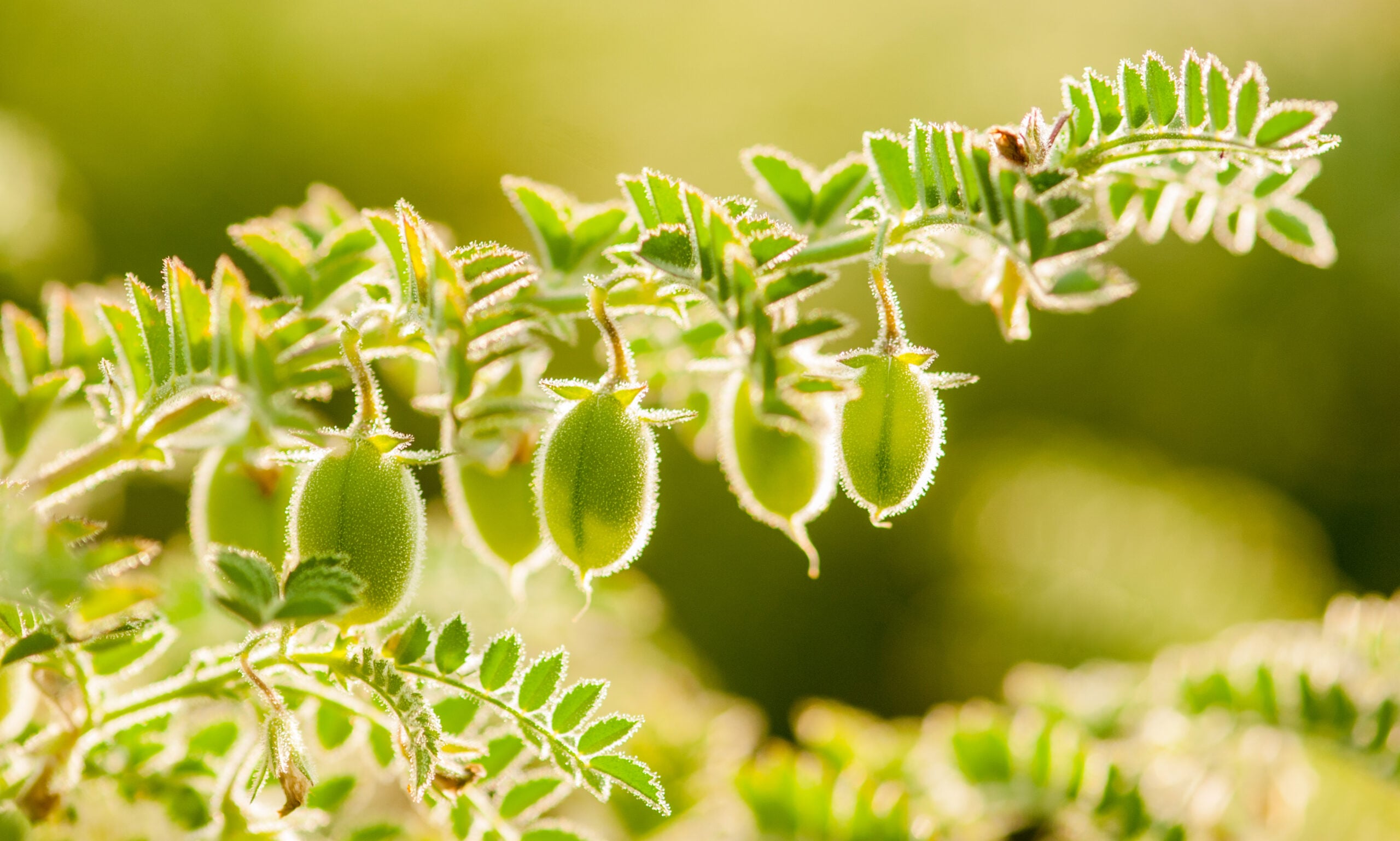 Young chickpea pods developing on the plant, the source of desi chickpeas used to make chana dal.
Quick Facts
- Type: Pulse (split Bengal gram / split chickpea)
- Origin: Middle East; widely cultivated across the Indian subcontinent
- Common names: Chana dal, Bengal gram dal, split chickpeas
- Color: Yellow (split and skinned)
- Flavor: Mild, nutty, earthy
- Cooking time: 20 to 30 minutes (pressure cooker, soaked); longer on stovetop
- Nutrients: High in plant protein, fiber, iron, and folate
- Common uses: Dal curry, soups, curries, tempering, savory snacks
Protein for the People
Chana dal has long been a practical source of everyday protein in kitchens, especially in vegetarian meals. It is filling and easy to include in simple lunches and dinners.
With its natural protein and fiber, it helps meals feel satisfying when paired with rice, roti, or vegetables. From home kitchens to community meals, chana dal continues to support everyday nourishment in a steady, familiar way.
A Dish That Changes With the Map
Chana dal changes character as it moves from one kitchen to another across the world. In some homes, it is simmered into a thick, spiced stew served with flatbreads or rice, while in others it is cooked lighter with broth-like consistency for a simpler, everyday meal.
In South Asian cooking, it often appears in dals, curries, and savory snacks. In diaspora kitchens across the UK, North America, the Middle East, and beyond, it is also adapted into soups, grain bowls, patties, and comfort-style one-pot meals using local ingredients and family preferences.
Some cooks keep it soft and creamy, while others leave a little bite for texture. Some lean into garlic and warming spices, others keep the seasoning mild and clean. The ingredients may shift, but chana dal remains the same kind of staple: versatile, satisfying, and easy to make your own.
Affordable, Accessible, Essential
What keeps chana dal so relevant in everyday cooking is how naturally it fits into daily life. It is affordable for regular use, easy to find in grocery stores and local markets, and simple to keep on hand for weeks or even months.
It also works well with basic pantry staples, so you do not need a long ingredient list to make a satisfying meal. A small quantity can stretch into a full pot, especially when paired with rice, roti, or vegetables.
That everyday practicality is what makes it essential. Chana dal is one of those ingredients that is always useful, always adaptable, and always ready when you need a reliable meal.
What It Tastes Like
Chana dal has a mild, nutty flavor with an earthy warmth that becomes deeper as it cooks. It is more hearty than moong dal or masoor dal, but still gentle enough to work in both simple and spice-forward dishes.
Its texture is one of its best qualities. When cooked well, chana dal turns tender but usually keeps as light bite, which gives it a more substantial feel than softer dals.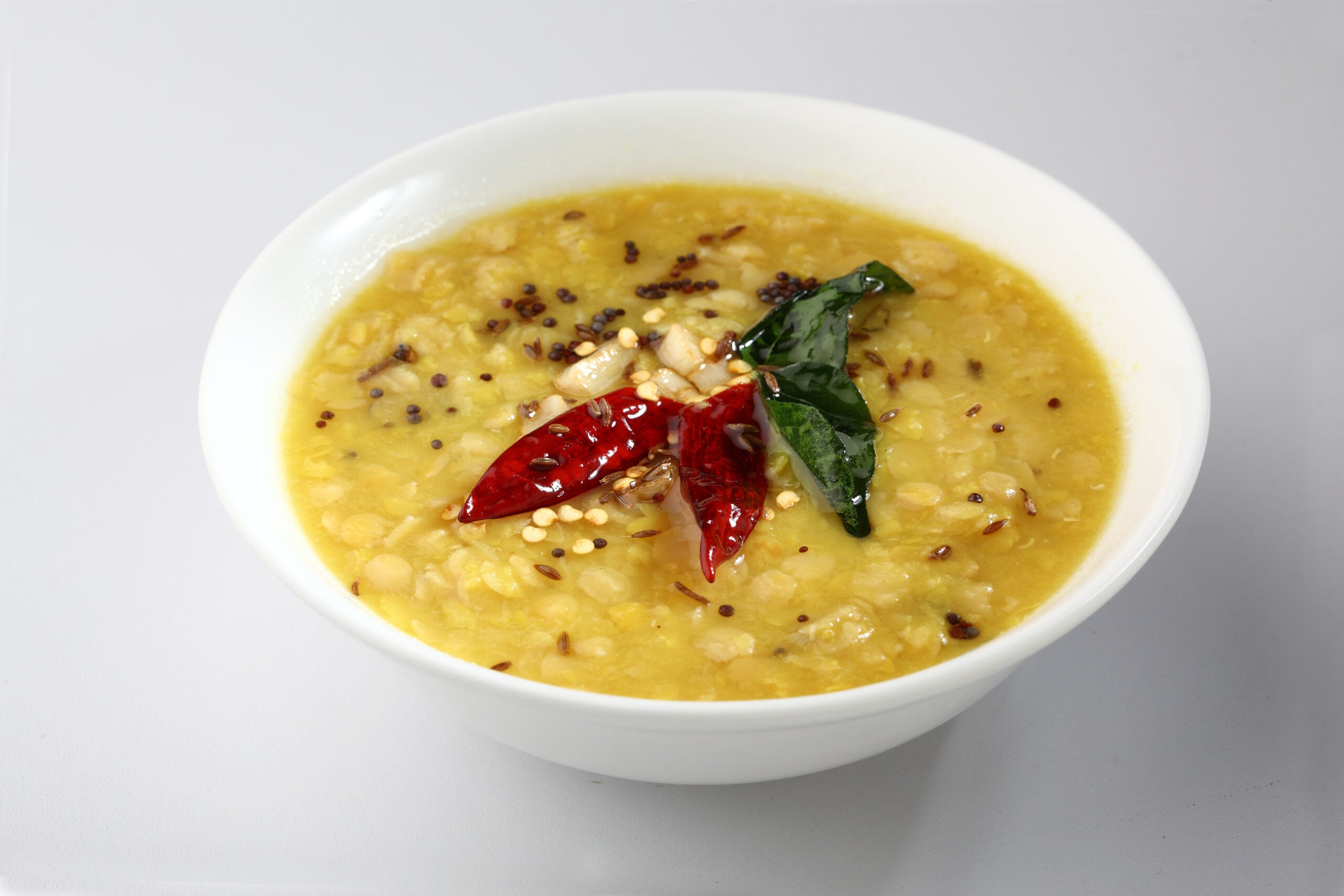 A bowl of chana dal finished with a tempering of spices for a simple, comforting meal.
Chana Dal: Nutritional Value (Per 1 Cup Cooked, Approx.)
- Calories: 269 kcal
- Protein: 14.6 grams
- Carbohydrates: 44.8 grams
- Dietary Fiber: 13.1 grams
- Fat: 4.3 grams
- Iron: 4.7 mg
- Folate (B9): ~250 mcg
- Potassium: ~477 mg
- Magnesium: ~80 mg
- Calcium: ~80 mg
These are approximate values scaled from cooked chana dal nutrition listed per 100 g (Source). Values can vary by soaking, cooking method, and thickness.
Health Benefits That Actually Matter
Protein Support
Chana dal provides plant-based protein, which helps support muscle maintenance and makes meals more filling (Source).
Fiber for Digestion
It is naturally rich in fiber, which supports digestion and can help with bowel regularity when eaten with enough fluids (Source).
Steadier Energy
Because pulses digest more slowly than refined carbs, chana dal can help meals feel more balanced and may reduce quick energy dips after eating (Source).
Iron and Folate
Chana dal contributes nutrients like iron and folate, which support healthy blood formation and everyday energy needs (Source).
Heart-Friendly Nutrients
Its fiber plus minerals like potassium and magnesium fit well in an overall heart-supportive eating pattern (Source).
Supports healthy weight management
The combination of protein and fiber helps you feel fuller for longer, which may reduce unnecessary snacking (Source).
Potential Health Risks
Digestive Discomfort
Because it is high in fiber, eating large portions may cause gas or bloating, especially if your body is not used to pulses (Source).
Uric Acid
Chana dal contains purines, so large amounts may worsen gout or high uric acid issues in some people (Source).
Kidney Limits
People with kidney disease may need to watch portions due to potassium and phosphorus content (Source).
Iron Absorption
Natural phytate content of chana dal can reduce mineral absorption, including iron, especially with frequent large servings (Source).
FAQs
Is chana dal the same as chickpeas?
Chana dal comes from desi chickpeas, but it is split and skinned. Whole chickpeas and chana dal cook and behave differently.
Do I need to soak chana dal?
Soaking is not always required, but it helps it cook faster and more evenly. It can also make it easier to digest.
How long does chana dal take to cook?
In a pressure cooker, it usually takes about 15 to 25 minutes after soaking. On the stovetop, it may take longer depending on freshness and soaking time.
Why is my chana dal still hard?
It may not have been soaked long enough, cooked long enough, or it may be older stock. Adding salt or acidic ingredients too early can also slow softening.
Can I use chana dal instead of toor or moong dal?
You can, but the texture and cooking time will be different. Chana dal stays firmer and takes longer to soften.
Is chana dal gluten-free?
Yes, chana dal is naturally gluten-free. However, cross-contact can happen if processed in shared facilities.
Can I cook chana dal in an Instant Pot?
Yes. It works very well in an Instant Pot or pressure cooker and softens evenly when cooked under pressure.
How should I store chana dal?
Keep it in an airtight container in a cool, dry place. Properly stored, it can last several months.
The Quiet Hero of the Indian Plate
Chana dal does not try to stand out, yet it shapes countless everyday meals. It brings substance and comfort in a steady way, adding body to dishes without overpowering them.
It fits easily into different styles of cooking, from simple weekday meals to richer preparations for gatherings. Its presence may be quiet, but its role is consistent.
That is what makes chana dal special. It supports the meal without demanding attention, proving that the most dependable ingredients are often the ones we notice the least.
Learn More About Chana Dal
Moon Rice – What is chana dal?
house of veda – Seven Amazing Benefits of Chana Dal and How to Enjoy It